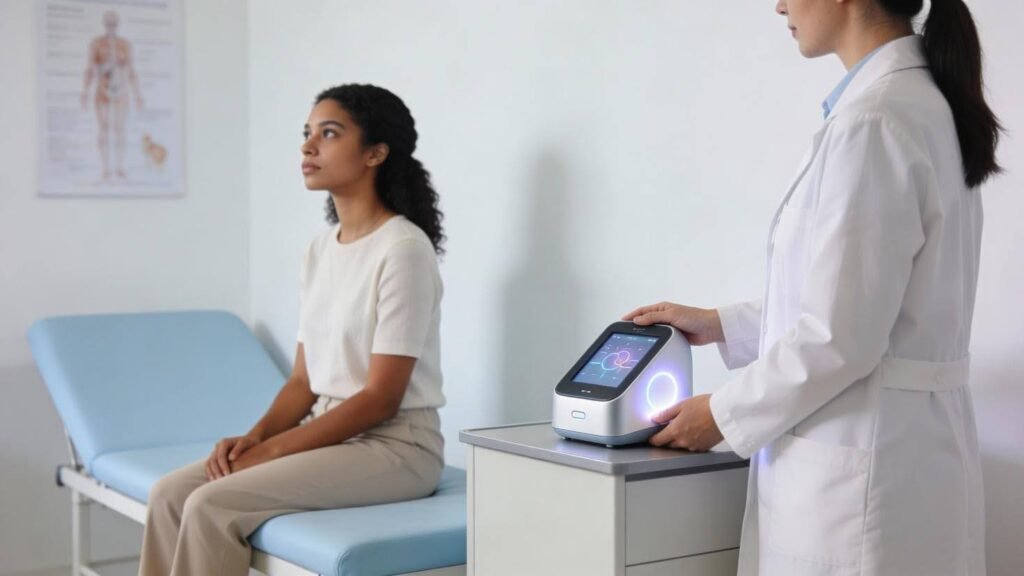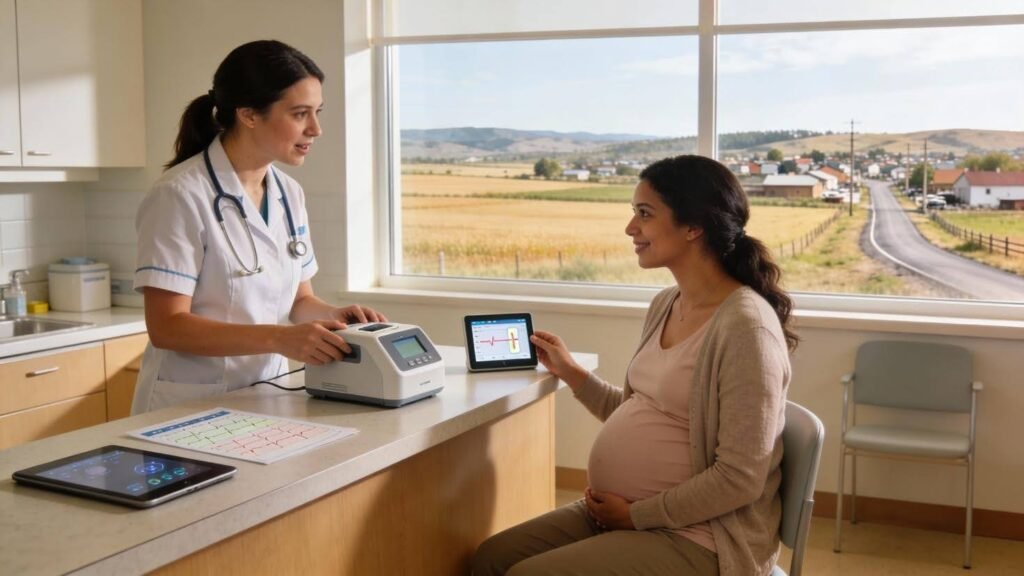

Biomarker-based testing and emerging point-of-care tools are improving risk assessment for preeclampsia, although most newer assays are better described as prognostic or triage-support tools rather than definitive standalone diagnostic tests.
Why Current Preeclampsia Diagnostics Fall Short
Preeclampsia affects an estimated 2 to 8 percent of pregnancies worldwide and remains a leading contributor to maternal and perinatal morbidity and mortality, according to multiple epidemiologic reviews. It is generally characterized by new-onset hypertension after 20 weeks of gestation with evidence of maternal organ dysfunction and, in some cases, fetal growth restriction.
Traditional assessment still relies on blood pressure measurement, proteinuria assessment and laboratory evaluation of maternal organ function. These tools remain clinically essential, but they do not always predict which patients will progress rapidly to severe disease.
The diagnostic toolkit for preeclampsia has been remarkably narrow relative to the complexity of the condition. Blood pressure and urine protein testing can confirm the presence of hypertensive disease, but they offer limited predictive power for identifying which pregnancies will progress to severe manifestations involving liver dysfunction, renal impairment, or HELLP (Hemolysis, Elevated Liver Enzymes and Low Platelets) syndrome. The clinical consequence is a management approach that is often reactive rather than proactive, where healthcare providers must balance the risks of premature delivery against the risks of expectant management with incomplete prognostic information.
This diagnostic gap is most consequential in settings where access to laboratory infrastructure is limited and where the burden of maternal morbidity from hypertensive disorders is disproportionately concentrated. Improving the precision and accessibility of preeclampsia risk assessment is therefore not only a clinical priority but a health equity imperative.
PlGF and sFlt-1: The Science of Preeclampsia Biomarkers
Two angiogenic biomarkers, placental growth factor (PlGF) and soluble fms-like tyrosine kinase-1 (sFlt-1), have become central to modern preeclampsia risk stratification because they reflect placental dysfunction. Their main current value is to help assess the likelihood of disease progression or near-term adverse outcomes in selected symptomatic patients.
The biological rationale is well established. In healthy pregnancies, the placenta releases PlGF to promote vascular growth, while sFlt-1 acts as a natural counterbalance. In pregnancies that develop preeclampsia, this balance is disrupted: PlGF levels fall and sFlt-1 levels rise, often weeks before clinical symptoms manifest. The ratio between these two markers therefore provides a quantitative window into placental health that is not available through conventional clinical assessment alone.
In 2025, Roche received FDA 510(k) clearance for its Elecsys sFlt-1/PlGF ratio test as a prognostic aid in hospitalized pregnant patients with hypertensive disorders of pregnancy. This clearance was specifically for risk stratification and triage support, not for standalone diagnosis of preeclampsia and that distinction is clinically important.
Biomarker testing supports risk stratification, triage and surveillance planning. It should not be conflated with a direct basis for prophylactic aspirin initiation in early pregnancy, because aspirin use is generally guided by established maternal risk-factor frameworks rather than by late-pregnancy biomarker testing alone.
Rapid Point-of-Care Devices for Pre-eclampsia Screening
Rapid and portable biomarker platforms remain an active area of research. Investigators are evaluating lateral flow systems, biosensors and other miniaturized formats intended to shorten turnaround time and extend access beyond tertiary centers.
These technologies hold promise, especially for resource-constrained settings, but many remain at the developmental or early-validation stage rather than serving as broadly implemented clinical tools. Researchers have achieved detection limits in the low picogram-per-milliliter range using nanoparticle-based lateral flow platforms and in April 2025, researchers from IIT-Madras and collaborators reported a portable fiber-optic biosensor capable of identifying a key protein biomarker for preeclampsia in about 30 minutes.
The translation pathway from laboratory prototype to clinically deployed point-of-care device is complex, requiring not only analytical validation but also usability studies, stability testing under varied environmental conditions, manufacturing scale-up and regulatory clearance in multiple jurisdictions. Each of these steps introduces time and cost that must be factored into realistic assessments of deployment timelines.
The research toolkit also extends to exosome-based diagnostics, leveraging nanoscale extracellular vesicles secreted by placental cells that carry molecular cargo reflecting placental health. Integrated strategies combining capture technologies, lab-on-a-chip platforms and AI-driven data interpretation are being explored, though widespread clinical adoption remains a future prospect.
AI and Remote Monitoring
Artificial intelligence and machine learning are increasingly being studied as interpretive layers that can combine biomarkers with clinical risk factors, imaging, and longitudinal monitoring data. The NIH’s Human Placenta Project is exploring how machine learning can process molecular and imaging data to support non-invasive assessment, though these applications remain largely investigational.
Wearable blood pressure monitoring may strengthen surveillance between prenatal visits, particularly when linked to structured escalation pathways. Connected devices that enable remote blood pressure tracking can detect early hypertensive trends that may precede clinical manifestations of the disease. As with AI-based tools, claims about these technologies should remain focused on their potential and emerging use rather than assured outcome improvement.
The convergence of point-of-care biomarker testing and AI-powered risk assessment could, if validated, create a clinical model in which rapid bedside measurement of key analytes is interpreted through predictive algorithms and delivered to clinicians as an actionable risk score. Such a model would represent a meaningful shift from schedule-driven prenatal care toward a more risk-adaptive surveillance approach, though its clinical value remains to be demonstrated at scale.
Equity and Deployment
The global burden of severe maternal outcomes from hypertensive disorders falls disproportionately on low- and middle-income countries. Point-of-care tests for these settings must be affordable, robust, easy to use and clinically reliable. Even then, diagnostics alone are not sufficient; referral systems, treatment capacity and timely delivery care remain decisive factors in reducing maternal mortality.
Lateral flow and paper-based microfluidic assays that require no electricity and produce visual readouts are advancing through field validation in sub-Saharan Africa and South Asia. If validated at scale, these devices could enable frontline health workers to identify high-risk pregnancies at the community level and facilitate timely referral to appropriately equipped facilities.
The design requirements for these settings are exacting: devices must tolerate ambient temperature storage, function with minimal training and deliver results within timeframes compatible with the workflow of community health visits. Several development programs are now specifically targeting these constraints and early field results suggest that decentralized biomarker screening may be integrable into existing antenatal care pathways.
Advocacy and Education
The Preeclampsia Foundation has played a notable role in advancing the field, hosting biomarker consortia in 2012 and 2016 that convened interdisciplinary experts to address regulatory hurdles, define clinical needs and develop recommendations for moving biomarker-based testing toward broader adoption. The Foundation’s ongoing educational initiatives, including the “Ask About Preeclampsia Tests” resources launched on October 7, 2025, reflect a growing emphasis on patient empowerment and shared decision-making in the management of hypertensive disorders of pregnancy.
Disclaimer: All information presented in this article is intended for general awareness and educational purposes only. It does not constitute medical, diagnostic or therapeutic advice. Consult qualified and licensed healthcare professionals for any clinical, diagnostic or treatment decisions.
References
- Ng HJ, Chaturvedi R, et al. Biomarkers and point of care screening approaches for the management of preeclampsia. Commun Med. 2024;4:215. doi:10.1038/s43856-024-00642-4.
- Ghorbanpour M, et al. Quantitative point of care tests for timely diagnosis of early-onset preeclampsia with high sensitivity and specificity. Angew Chem Int Ed. 2023;62(26):e202301193. doi:10.1002/anie.202301193.
- Shaon MA, et al. Preeclampsia diagnostics and therapeutics: advances, challenges and prospects in nanoscale exosome-based clinical translation. ACS Nano Med. 2026;1(2):342–381. doi:10.1021/acsnanomed.5c00056.
- Preeclampsia Foundation. Accelerating the development and adoption of biomarkers. preeclampsia.org/biomarkers.
- Preeclampsia Foundation. New educational tools for understanding preeclampsia predictive and diagnostic testing. Press release. October 7, 2025. preeclampsia.org.
- Roche Diagnostics. Elecsys sFlt-1/PlGF ratio immunoassay. Product information. diagnostics.roche.com.
- World Health Organization. Pre-eclampsia. Fact sheet. who.int.