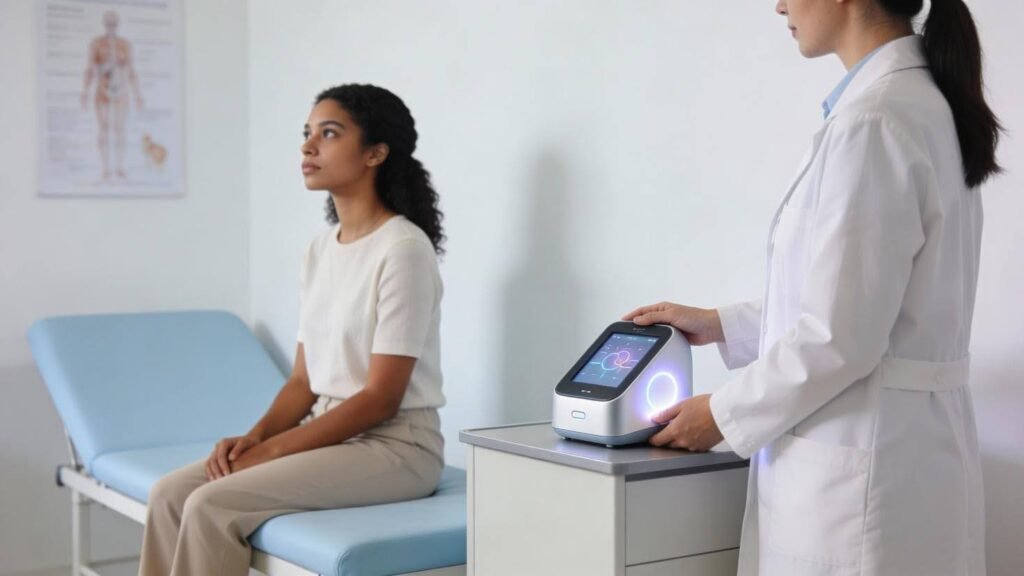

Recent U.S. regulatory and guideline changes have expanded access to self-collected HPV screening, creating a more patient-centered option for cervical cancer prevention while still requiring careful follow-up pathways.
A Persistent Access Gap
Cervical cancer remains one of the most preventable cancers, yet screening gaps persist because conventional screening often depends on in-clinic pelvic examinations, appointment access, transportation, and patient comfort with the procedure. In the United States, the burden remains substantial, with thousands of deaths each year and new invasive cervical cancer cases still occurring despite long-established screening tools.
Persistent infection with high-risk human papillomavirus (HPV) accounts for nearly all cervical cancers, which is why screening has increasingly shifted toward primary HPV testing rather than relying only on cytology. This scientific shift laid the groundwork for validated self-collection of vaginal specimens for HPV testing in defined care pathways.
The disparity in screening adherence is particularly acute among women of color, immigrants and those without health insurance. Studies have consistently shown that women who are underscreened or never screened account for a disproportionate share of advanced-stage cervical cancer diagnoses. Addressing this inequity requires not merely improving existing screening pathways but rethinking the interface between the diagnostic system and the patient populations it has historically underserved.
FDA Approval and 2026 HRSA Guideline Updates
In 2024, the U.S. Food and Drug Administration (FDA) authorized expanded use of self-collected vaginal samples in healthcare settings for certain HPV testing workflows. In 2025, the FDA approved the Teal Wand by Teal Health as an at-home self-collection device specifically indicated for cervical cancer screening within the company’s clinical and telehealth-supported care model. It should be noted that FDA approval was specific to this device and care pathway and does not represent a blanket authorization for all at-home HPV self-collection approaches.
This regulatory momentum was followed by updated clinical and preventive guidance. In December 2025, the American Cancer Society updated its cervical cancer screening guideline to include self-collected vaginal specimens as an acceptable option for primary HPV screening in appropriate settings. HRSA then announced updated Women’s Preventive Services Guidelines on January 5, 2026, including self-collected HPV testing for women aged 30 to 65 years at average risk.
The HRSA update stated that, for plan years beginning on or after January 1, 2027, most private health plans subject to the preventive services requirement must cover additional testing necessary to complete cervical cancer screening. This coverage provision applies specifically within the guideline structure and should not be interpreted as a blanket guarantee for every possible self-collection workflow or product.
Clinical Evidence for HPV Self-Collection Accuracy
Self-collection is operationally straightforward: the patient collects a vaginal sample using an approved collection device and the specimen is then analyzed in a laboratory for high-risk HPV. The supporting evidence indicates that self-collected vaginal specimens can perform comparably to clinician-collected samples for HPV detection when validated assays and appropriate workflows are used.
Guideline updates still preserve some caution. Current recommendations distinguish between self-collected and clinician-collected pathways and follow-up intervals may differ depending on the specimen type, assay and result. When self-collected vaginal specimens test negative for HPV, repeat testing at a three-year interval is recommended, compared with a five-year interval for clinician-collected cervical samples.
Equity and Implementation
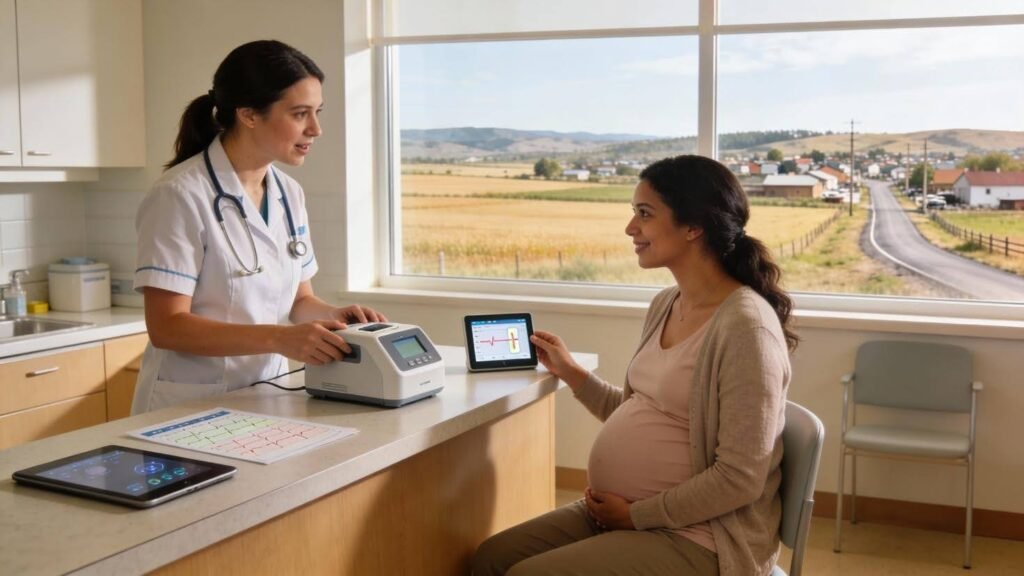
Self-collection may help reduce barriers faced by women in rural settings, medically underserved communities and individuals who avoid pelvic examinations because of trauma, cultural concerns, or prior negative care experiences. That makes it a meaningful access improvement, but not a replacement for the full screening and diagnostic continuum. Research has consistently shown that rural women are more likely to be diagnosed with and die from cervical cancer compared with urban women, largely due to geographic distance from screening services and limited access to specialist follow-up care.
The practical success of self-collection depends on more than analytical performance. Programs still need patient education, laboratory capacity, clear result communication and timely access to follow-up colposcopy or additional testing when results are positive.
The self-collection model carries important implications beyond the United States. The World Health Organization’s (WHO) global strategy to eliminate cervical cancer as a public health problem envisions screening 70 percent of women with a high-performance test by age 35 and again by age 45. In low- and middle-income countries, where the burden of cervical cancer is greatest and access to trained cytologists and colposcopists is most limited, self-collection offers a scalable pathway to achieving these targets. Community health workers can distribute and collect kits without requiring specialized clinical infrastructure, expanding the geographic and demographic reach of screening programs.
Several large-scale implementation studies in sub-Saharan Africa, South and Southeast Asia (SEA) and Latin America (LATAM) have demonstrated that self-collection increases screening uptake among women who have never previously been screened. The integration of self-collection with mobile health platforms for result notification and follow-up navigation is further strengthening the end-to-end screening pathway, supporting the goal of ensuring that positive results translate into timely diagnostic evaluation and treatment.
Molecular Diagnostics: The Engine Behind Self-Collection
The clinical viability of self-collection rests on the analytical capabilities of the molecular HPV assays that process the specimens. These assays detect DNA or RNA from high-risk HPV genotypes with high sensitivity and their performance characteristics have been validated across multiple specimen types, including clinician-collected cervical samples and self-collected vaginal swabs. The distinction is important: self-collection changes the specimen acquisition step, not the laboratory analysis, which continues to meet established standards for clinical sensitivity and specificity.
Several FDA-cleared platforms are now available or in development for use with self-collected specimens. The Roche cobas HPV test was among the first to receive FDA clearance for use with both clinician-collected and certain self-collected samples. Additional platforms from other manufacturers are progressing through regulatory review and the competitive dynamic is expected to drive improvements in assay turnaround time, genotype resolution and cost per test.
A critical consideration for clinical implementation is the follow-up pathway for positive results. Self-collection can identify women with high-risk HPV infection, but it cannot determine whether precancerous cervical changes are present. Women who test positive on a self-collected specimen require clinical follow-up, typically involving a clinician-collected cervical sample for triage testing and, in some cases, colposcopy. The integrity of this follow-up continuum is essential to the public health value of self-collection programs.
What HPV Self-Collection Means for Diagnostics Developers
For diagnostics developers, HPV self-collection demonstrates that screening can be decentralized without abandoning evidence-based laboratory testing. It also provides a model for other clinical applications where collection barriers reduce screening adherence.
Quest Diagnostics launched its HPV self-collection service in April 2025, initially in physician offices with plans to extend to its network of patient service centers. Other major diagnostic companies are developing next-generation self-collection devices. The convergence of regulatory clearance, guideline endorsement and forthcoming insurance coverage requirements supports growing adoption, though real-world uptake will depend on awareness campaigns, provider integration and the effectiveness of follow-up pathways.
Looking ahead, the self-collection model may eventually be adapted for other conditions where sample collection barriers impede screening compliance, provided that robust clinical evidence supports the analytical validity of self-collected specimens in each new application.
Disclaimer: All information presented in this article is intended for general awareness and educational purposes only. It does not constitute medical, diagnostic or therapeutic advice. Consult qualified and licensed healthcare professionals for any clinical, diagnostic or treatment decisions.
References
- Perkins RB, et al. Self-collected vaginal specimens for human papillomavirus testing and guidance on screening exit: an update to the American Cancer Society cervical cancer screening guideline. CA Cancer J Clin. 2026;76(1):e70041. doi:10.3322/caac.70041.
- Health Resources and Services Administration. Update to the Women’s Preventive Services Guidelines. Federal Register. 2026;91(3):283–290. Published January 5, 2026.
- American Cancer Society. Updated cervical cancer screening guideline: major changes include self-collection for HPV testing and guidance on exiting screening. Press release. December 4, 2025. pressroom.cancer.org.
- Health Resources and Services Administration. New cervical cancer screening guidelines strengthen women’s preventive health. Press release. January 5, 2026. hrsa.gov.
- Sheehy A, et al. Self-collection for cervical cancer screening. JAMA. Published online January 2026. Cited in: CIDRAP, HHS recommends home HPV testing for women for the first time. January 5, 2026.
- Quest Diagnostics. Quest Diagnostics introduces HPV specimen self-collection for cervical cancer screening. Press release. April 2, 2025. newsroom.questdiagnostics.com.
- World Health Organization. Global strategy to accelerate the elimination of cervical cancer as a public health problem. Geneva: WHO; 2020. who.int/publications.