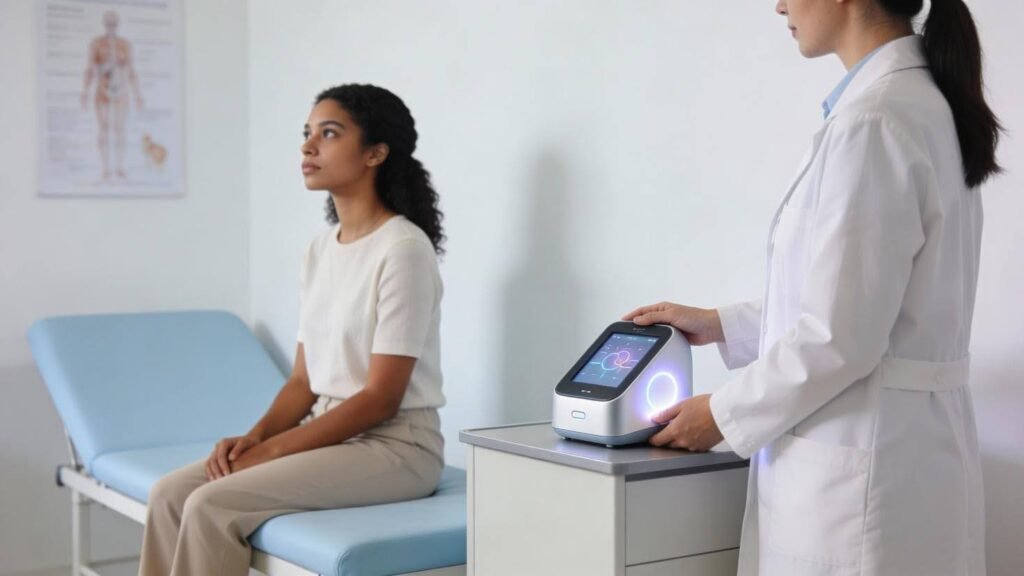

Healthcare access should not depend on a postal code, yet where a woman lives still shapes the quality, timeliness, and completeness of care she receives. Rural communities face a mix of provider shortages, long travel distances, and fragile hospital infrastructure that directly constrain access to diagnostics. For women’s reproductive and maternal health—where timing is critical—these constraints translate into delayed diagnoses, missed interventions, and avoidable complications.
Point-of-care testing (POCT) offers a pragmatic way to address these structural barriers by bringing key tests into rural clinics, community health centers, pharmacies, and mobile units. Instead of sending samples to distant laboratories and waiting days for results, POCT enables same-visit answers and decisions, supporting earlier treatment, fewer journeys, and more equitable outcomes.
The rural healthcare reality
Rural health systems worldwide are under acute strain, and the United States is a prominent example.
Rural hospital closures have accelerated: analyses show over 180 rural hospitals have closed or converted since 2010, with many more considered financially vulnerable. These closures hollow out local services, forcing patients to travel further for routine and urgent care. Workforce shortages compound the problem: rural areas have fewer clinicians per capita, and many U.S. counties—especially rural ones—have no in-county obstetric services. Even where primary care is available, clinicians often operate with limited diagnostic infrastructure, staff, and specialist backup.
The daily impact on women is tangible. Less than half of rural women in the U.S. live within a 30-minute drive of a hospital offering perinatal services, and a substantial proportion travel 60 minutes or more. For maternity care, some rural women drive over 100 miles to access labor and delivery services. Economic and time pressures add friction: rural residents have higher rates of being uninsured or under-insured and are more likely to delay or forgo care due to cost. Time away from hourly work, childcare arrangements, and fuel costs all create barriers to seeking diagnostics, especially when multiple trips are required.
These system-level constraints make it harder to deliver timely diagnostics, particularly for conditions that require serial monitoring or repeat testing across pregnancy and the reproductive lifespan.
How rural gaps hit women's health
Rural women experience distinct disadvantages across the reproductive, maternal, and chronic disease continuum.
Prenatal and maternal care
Multiple studies show clinically meaningful rural–urban gaps in maternal care and outcomes. Rural pregnant individuals are less likely to have any visit in the year before pregnancy and are more likely to experience fragmented or incomplete care across the prenatal and postpartum periods. Rural residents face higher risks of severe maternal morbidity and mortality, with closures of labor and delivery units linked to reductions in adequate prenatal care.
Frequent laboratory tests—such as hemoglobin and hematocrit, glucose tolerance or glucose monitoring, and urine protein—are central to guidelines for prenatal care but may require repeated long-distance trips when local testing is not available. For a woman living an hour from the nearest laboratory, standard prenatal visit schedules translate into dozens of hours on the road over the course of a pregnancy.
Fertility and reproductive endocrinology
Specialist fertility services and advanced reproductive endocrinology testing are typically concentrated in larger urban centers. Rural women with infertility may struggle to access even foundational investigations—such as hormonal profiles, semen analysis for partner evaluation, and cycle-linked monitoring—without multiple visits to distant facilities. When combined with fewer local specialists and long waits for appointments, these logistical barriers can delay diagnosis and treatment, exacerbate emotional stress, and reduce overall uptake of fertility services.
Chronic and gynecologic conditions
Conditions such as polycystic ovary syndrome (PCOS), endometriosis, thyroid disease, and diabetes require recurring diagnostics to support optimal management. Rural residents bear a high burden of chronic disease, and care is often fragmented across primary care, visiting specialists, and occasional hospital services. Limited local access to labs and imaging means that essential tests—for example, HbA1c in diabetes, inflammatory markers, or pelvic ultrasound—may be delayed or foregone, contributing to suboptimal control and complications.
In emergencies such as suspected preeclampsia, sepsis, or ectopic pregnancy, any delay in acquiring diagnostic data can be life-threatening, especially when transfer to a better-equipped facility involves long journeys.
Point-of-care testing: bringing diagnostics to the front line
Point-of-care testing decentralizes diagnostics by placing compact, often automated devices directly in care settings where patients present—rural clinics, small hospitals, pharmacies, and mobile services.
What POCT can deliver in rural women's health
Evidence from rural and remote programs, particularly in Australia, New Zealand, and the United Kingdom, highlights several consistent benefits.
Immediate results and same-visit decisions: POCT analyzers can provide quantitative or qualitative results within minutes for analytes such as hemoglobin, glucose, creatinine, troponin, C-reactive protein, and pregnancy-related markers. For rural women, this enables confirmation of pregnancy, screening for gestational diabetes, identification of anemia, and evaluation of infection or preeclampsia risk during a single visit.
Reduced transfers and travel: Rural and remote POCT networks have demonstrated reductions in inter-hospital transfers and shorter lengths of stay when on-site testing supports quicker diagnosis and triage. In some settings, POCT implementation has been associated with substantial annual cost savings due to fewer emergency transfers and more timely discharges.
Enhanced patient-centred care: Studies describe POCT as “life-changing” for patients with acute, chronic, and infectious diseases in remote communities because testing can be performed closer to home, in culturally safe environments, and integrated with counselling at the same encounter. For women balancing family, work, and caregiving roles, this greatly reduces opportunity costs and increases the likelihood that recommended tests are actually completed.
Clinical scenarios for rural women
POCT is not a single device but an ecosystem of targeted tests that can support key women’s health use cases.
Routine prenatal visits: A rural clinic with POCT capabilities can perform hemoglobin, glucose, and urine protein testing on-site, allowing risk assessment for anemia, diabetes, and hypertensive disorders in pregnancy during each visit. Abnormal findings can trigger immediate interventions, closer follow-up, or timely referral without waiting days for laboratory confirmation.
Infection management: Rapid tests for urinary tract infections, group A streptococcus, and some sexually transmitted infections allow same-day treatment decisions. In pregnancy, prompt diagnosis and management of urinary tract infections are important to reduce risks such as preterm labor and pyelonephritis.
Diabetes and cardiometabolic care: POCT for glucose and, in some settings, HbA1c can support on-the-spot titration of therapy for women with gestational or pre-existing diabetes, reducing the need for separate lab visits. Similar models have been applied in rural chronic disease programs, yielding better engagement and, in several evaluations, cost-effective care.
Fertility and endocrine assessment: While complex reproductive hormone panels may still require centralized laboratories, POCT can support initial screening—for example, thyroid function or basic metabolic markers—helping primary care clinicians triage which women can be managed locally and who needs expedited referral.
Mobile health units: extending reach beyond clinics
Mobile health units equipped with POCT create a further layer of access by bringing diagnostics to workplaces, schools, community centers, and remote settlements. Programs in remote Australia and other settings have shown that mobile services with POCT can expand screening for diabetes, cardiovascular risk, and infectious diseases in communities that would otherwise have limited contact with formal health services.
For women, mobile units can deliver pregnancy testing, sexually transmitted infection screening, blood pressure and glucose checks, and basic prenatal surveillance in community locations, often in collaboration with local health workers or midwives. These models not only reduce travel but also build trust, especially when services are co-designed with communities and staffed by culturally competent providers. When results are available immediately, counselling and linkage to ongoing care—whether local or via telehealth with specialists—can occur in the same encounter.
Making POCT work in rural systems
To move from pilot projects to sustainable impact, rural health systems must address implementation, quality, and policy considerations.
Choosing and supporting the right technologies
Rural clinics need POCT platforms that are robust, user-friendly, and fit for the local context. Key features include minimal sample handling, clear user interfaces, automated quality control, and low maintenance requirements. In areas with unstable power, devices that can operate on batteries or generators are particularly valuable. Connectivity to electronic health records and remote quality assurance hubs can improve data capture and oversight where infrastructure permits, but programs should not be paralysed where internet access remains limited.
Training is critical to ensure that non-laboratory staff perform testing correctly and interpret results appropriately. Successful rural programs have used structured training, competency assessments, and ongoing support, often via hub-and-spoke networks with reference laboratories or academic centers. Quality assurance—including internal quality control and participation in external quality assessment schemes—is essential to maintain confidence in POCT results and to align with regulatory and accreditation standards.
Economics, policy, and reimbursement
Cost-effectiveness analyses from several high-income countries indicate that POCT can be cost-effective or cost-saving in rural and primary care settings when reductions in hospital transfers, shortened stays, and earlier intervention are considered. However, adoption depends strongly on policy and payment: reimbursement frameworks that recognize the incremental costs and value of POCT in underserved areas encourage investment by rural providers. Overly complex regulatory requirements or fragmented funding can discourage small rural facilities from implementing POCT, even where clinical need is high.
Emerging digital infrastructure and telehealth policy can amplify POCT’s benefits by enabling remote specialist input based on point-of-care results, closing some gaps created by workforce shortages.
The path forward: POCT as a lever for equity
POCT alone will not solve rural health disparities; it must sit alongside strengthened workforces, improved transport and referral systems, and thoughtful use of telehealth. Yet the evidence is clear that placing reliable diagnostics closer to where rural women live and seek care can reduce delays in diagnosis and treatment, lower the practical and financial burden of accessing essential tests, and enable earlier, guideline-concordant intervention across pregnancy, reproductive health, and chronic disease.
For millions of rural women, this translates into more care delivered locally, fewer long journeys, and a greater sense that their health and time are valued equally to that of their urban counterparts. In an era of constrained resources and increasing demand, well-designed point-of-care testing networks represent a concrete, evidence-based step toward more equitable women’s health.
References
- Cecil G. Sheps Center for Health Services Research. Rural hospital closures [Internet]. Chapel Hill (NC): The University of North Carolina; c2025. https://www.shepscenter.unc.edu/programs-projects/rural-health/rural-hospital-closures/
- Chartis Center for Rural Health. 2025 rural health: state of the state [Internet]. Chicago (IL): Chartis; 2025. https://www.chartis.com/
- American Hospital Association. Rural hospital closures threaten access to care [Internet]. Chicago (IL): American Hospital Association; 2022. https://www.aha.org/news/headline/2022-09-08-aha-report-rural-hospital-closures-threaten-patient-access-care
- American College of Obstetricians and Gynecologists. Health disparities in rural women. Committee Opinion No. 586 [Internet]. Washington (DC): ACOG; 2014. https://www.acog.org/clinical/clinical-guidance/committee-opinion/articles/2014/02/health-disparities-in-rural-women
- Lisonkova S, Sabr Y, Chen I, et al. Rural–urban disparities in adverse maternal outcomes in the United States. Am J Public Health. 2023;113(3):382–392.
- Tangel V, Allen RH, Wisner K, et al. Disparities in maternal health visits between rural and urban communities in the United States. J Womens Health (Larchmt). 2024;33(5):421–430.
- Shephard MDS. The benefits and challenges of point-of-care testing in rural and remote communities. Clin Biochem Rev. 2020;41(3):99–111.
- Spaeth BA, Shephard MDS, Auld M, et al. Patient-centred point-of-care testing: a life-changing and transformational technology. Point Care. 2021;20(2):45–52.
- Wiencek J, Nichols JH. How to realize the benefits of point-of-care testing in primary care. Int J Health Policy Manag. 2020;9(10):415–423.
- Harvey S, Skinner L, McGowan H. Saving rural hospitals: the crisis in rural health care [Internet]. Washington (DC): Center for Healthcare Quality and Payment Reform; 2021. https://ruralhospitals.chqpr.org
- Nowhere to go: an overview of maternity care access across the U.S. Health Policy. 2025;129(11):e105–e112.
© Haemetrics 2026